Driving in the dark

Drivers may be risking safety on dark journeys

With the clocks having gone back, many people will now be making more of their car journeys in the dark.

However, new research shows some may be risking their own safety and that of other road users as they take these trips.


Driving when tired

According to a poll of 2,055 motorists by motorway services firm Roadchef, 32 per cent admitted to regularly getting behind the wheel in the dark while tired.

Furthermore, 42 per cent said they don’t always stop for a break on longer night-time journeys, with 51 per cent instead relying on rolling the windows down to keep them alert and 45 per cent resorting to loud music.

Spokesperson for road safety charity Brake Samuel Nahk said: “As the nights get longer, it is vital that drivers are fully aware of the dangers of driving in the dark, and that driving tired can be fatal.”

The RAC warns that reduced light in the autumn and winter can increase melatonin levels in human beings, resulting in more tiredness than usual. It recommends always stopping for a break should drowsiness occur and perhaps taking an advanced driving course to gain more experience of driving in the dark.

Jenny Smith, general manager for Tele-Gence, commented: “Evening and night-time trips may be unavoidable if you’re driving for business, but it’s essential to keep safety at the top of the agenda. If you feel tired, always stop to recharge your batteries. It’s as simple as that.”

Your business can benefit from affordable telematics with no hidden start-up fees or long-term commitments. Find out how at www.tele-gence.com


Work related stress

Fleet drivers blame work-related stress for accidents

Work-related stress could be causing a worrying number of accidents on Britain’s roads, according to a new study.

Research carried out by Lightfoot found 12 per cent of fleet drivers had cited stress caused by their job as the main reason for them having an accident.

This was followed by 12 per cent reporting phone calls during their journeys. As well as four per cent explaining that a work-related email had been the primary cause of their crash.


Feeling the pressure

The news suggests many business motorists may be having their journeys impinged upon by office issues. As well as colleagues trying to get hold of them while they are behind the wheel.

In fact, a quarter of drivers said they had been involved in a collision during a work-related journey or their commute. With recent figures reporting that one in three road deaths now involve a vehicle being driven for work.

Furthermore, a Brake and Direct Line survey discovered 39 per cent of drivers had lost concentration at the wheel due to work-related stress.

Mark Roberts, founder of Lightfoot, said: “Fleet staff may be feeling under pressure to get to meetings within certain time-frames, something that could lead to risky driving.”

“Work-related stress resulting in road accidents should be a red flag for all businesses operating company cars and fleet vehicles,” he added.

Ellie Baker, brand manager at Fuel Card Services, comments: “This is truly shocking news. We appreciate that many businesses have deadlines and targets to meet, but this should not come at the expense of their employees and other road users. We would urge companies to ensure staff taking to the roads have the time and space they need to complete every journey safely.”


Driving tips for the dark weather

Top tips on safer driving as the nights draw in

The clocks are preparing to turn back later this month and that means only one thing for motorists; evenings will be getting darker earlier.

Driving at night can come with significant dangers, so anyone taking to the roads after dark should always have their wits about them. With that in mind, here we’ve offered some sage advice for all road users when driving during the upcoming darker months of the year.

Top tips for safer night driving

Autumn and winter are notorious for having dark nights and poor visibility, with motorists also having to contend with harsh conditions that can further impact visibility. As a result, it’s important for drivers to understand the dangers of night driving and to adopt different behaviour when they get behind the wheel after dark. We advise:

  1. Avoid staring at oncoming traffic: The headlights of oncoming traffic can have a hypnotic effect on drivers, especially when travelling on motorways. As a result, it’s important to maintain your eyes on the road ahead and not oncoming traffic.
  2. Don’t dazzle other drivers: High beam headlights are useful when faced with roads without lighting. However, be aware that high beams can be dazzling to other road users and should only be used when there is no oncoming traffic.
  3. Keep your windscreen and mirrors clean: Maintaining good visibility is paramount when the light fades. Therefore, keeping your windows and mirrors clean will help to ensure you can see further.
  4. Watch out for vulnerable road users: Darkness can mask a range of vulnerable road users, including cyclists, motorcyclists and horse riders. Be extra vigilant and on the lookout at all times.
  5. Drive at an appropriate speed: When it’s dark, the visible distance in front of the vehicle will be lower. As a result, you should cut your speed to ensure your vehicle will always stop within your visibility.
  6. Don’t drive when tired: Tiredness can cause motorists to lose concentration and in extreme cases to even fall asleep at the wheel. Always aim to be well rested when embarking on any journey and try not to drive in the early hours of the morning, if possible.
  7. Get regular eye checks: Your vision is key to being able to discern hazards in the road and to generally drive safely. As a result, you should schedule regular eye tests to ensure you are able to see clearly even when it is dark outside.
  8. Wear the right eyewear: Following on from our last point, be sure to wear the correct eyewear that limits the impact of glare when travelling at night, as headlights from other vehicles could dazzle you more easily when wearing inappropriate glasses.

October’s the time to be extra careful

According to figures published by the Department for Transport, accident rates increase by 15 per cent on average in October each year in comparison to the preceding six months. This is largely due to the impact of darker evenings, falling leaves resulting in “greasy roads” and motorists failing to adequately adapt to the change in conditions.

Gordon Grant of Accident Exchange recently told the Telegraph: “October delivers some of the worst driving conditions of the year as the weather changes and the clocks go back but drivers continue as if they were in the summer months.

“They need to remember the basic laws of physics and common sense when the conditions change under their tyres.”

Ellie Baker, brand manager at Fuel Card Services, comments: “As the nights draw in at this time of year, all road users should be prepared to take on the additional challenges of driving in the dark.”

Drones-'keeping the nation's smart motorways moving'

Drones ‘keeping the nation’s smart motorways moving’

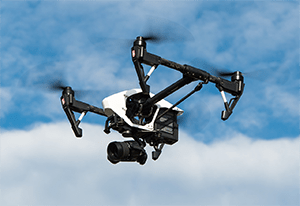
Drones are being used by Highways England engineers to more efficiently monitor the progress of smart motorways upgrades across the country.

Currently in use as part of the multi-million pound upgrade of the M6 between junctions 2 and 4 near Coventry. The drones can relay 3D-quality images of roadworks across a wide area.

Fewer closures and faster journeys

This high-quality imagery can be used by engineers and planners. It will help inform decisions around route closures, and other traffic management measures. This will ensure a minimal impact to motorists, from these essential works.

Highways England smart motorway sponsor Peter Smith commented: “Ordinarily, inspections by road workers require lane closures for safety reasons and can take up to several days.

“By using the drone we are able to reduce lane closures. This is because we can scan a much larger area in a quicker period of time.”

The footage allows detailed progress reporting on the development of gantries, foundations and other structures. All of which helps to minimise disruption and to keep the upgrade process moving swiftly forward.

Jenny Smith, general manager for Tele-Gence, commented: “Transport is the lifeblood of the UK economy and keeping traffic flowing is all-important when it comes to the major motorways of the UK. The latest technologies are helping engineers to improve efficiency and that’s great news for everyone.”

Your business can benefit from affordable telematics with no hidden start-up fees or long-term commitments. Find out how at www.tele-gence.com

Embracing the future of mobility

Embracing the future of mobility in the UK

Some of the world’s leading motor industry brands have come together with the Society of Motor Manufacturers and Traders (SMMT) to help to support dozens of new tech start-ups to drive innovation in the UK automotive sector.

The SMMT’s Future Mobility Challenge, aims to promote greater collaboration between established automotive manufacturers, and the next generation of creative designers and producers in the UK.

Supporting innovation in UK mobility

SMMT chief executive Mike Hawes commented: “The UK’s hard-won reputation as a hub for innovation and emerging new technologies means, we can continue to attract some of the best and brightest from across the world, to this event.

“We are on the cusp of a transport revolution, and UK automotive is ready for the journey.”

The challenge will see a total of 43 tech start-ups vying to secure funding and support for innovative new technologies in eight key areas:

  1. Generating insights and creating value from mobility data
  2. Innovative solutions for intelligent fleets
  3. Urban mobility solutions for future cities
  4. New ownership, shared and on-demand mobility models
  5. Creating new and superior customer experiences in the age of hyper convenience
  6. New connected and in-car services
  7. Automated driving technologies for on- and off-road vehicles
  8. E-mobility solutions

The candidates were shortlisted from a total of 136 entries and will see successful start-ups partnering with Ford Mobility, Bosch UK, Toyota, Honda Innovation and Volvo Car UK.

Planning for the future of transport

The support being offered to successful entries will include mentoring, ideas incubation and investment, piloting, routes to market and (potentially) acquisition. It represents a chance to ensure the UK’s automotive industry remains at the forefront of global planning to meet the transport needs of the future.

Arun Srinivasan, executive vice president and head of mobility solutions at Bosch UK, commented: “New technologies offer opportunities in mobility services that can help increase safety, reduce traffic congestion and create healthier, more liveable city environments.

“Connecting with UK start-ups is an important way for us to continue to drive the entrepreneurial spirit that was instilled by our founder Robert Bosch.”

It’s a sentiment echoed by all of this year’s challenge partners, which also includes the UK’s Department for International Trade, techUK, Scottish Enterprise, Grant Thornton, Canada’s Automotive Parts Manufacturers’ Association, the UK Israel Tech Hub, Italy’s SMAU and many more.

The challenge builds on last year’s successful event, which saw 18 start-ups join forces with Ford Mobility, Bosch, Toyota, Jaguar Land Rover and BMW with the aim of helping to create digital innovations for transport, ranging from new cyber security solutions to the use of AI in future vehicles.

Jenny Smith, general manager for Tele-Gence, commented: “Developing the technologies that will support a cleaner, greener and more autonomous future for UK mobility is paramount. The Future Mobility Challenge will prove crucial in bringing new ideas to life and helping ambitious start-up businesses to fulfil their potential.”

Your business can benefit from affordable telematics with no hidden start-up fees or long-term commitments. Find out how at www.tele-gence.com